
A Powder Pressing Machine transforms loose metal, ceramic, pharmaceutical, or other engineered powders into stable shapes through controlled compaction. It uses a die, upper punch, lower punch, and carefully adjusted pressure. The powder enters the die cavity, settles around the tooling, and receives force from one or both punches. Particles move, rearrange, and bond through mechanical pressure. The compact then leaves the die during ejection.
Powder metallurgy expert Dr. Randall M. German describes the principle clearly: “Compaction is controlled particle rearrangement under pressure.” That short statement explains why powder selection matters as much as machine force. A technician must monitor particle size, moisture, lubricant levels, filling depth, and pressing speed. Small changes can create cracks, density differences, or weak edges. The finished part may look smooth, yet its internal structure can still be uneven.
A typical Powder Pressing Machine includes a hydraulic or mechanical drive, programmable controls, pressure sensors, and a robust die set. Operators often inspect the first pieces, measure dimensions, and adjust the filling system before longer production runs. Experience remains important. No machine can correct every powder defect. This is where the explanation becomes less perfect. Pressing pressure alone does not guarantee quality. Material flow, tool wear, temperature, and ejection timing also influence results. Understanding these details makes the machine easier to operate safely, consistently, and responsibly.
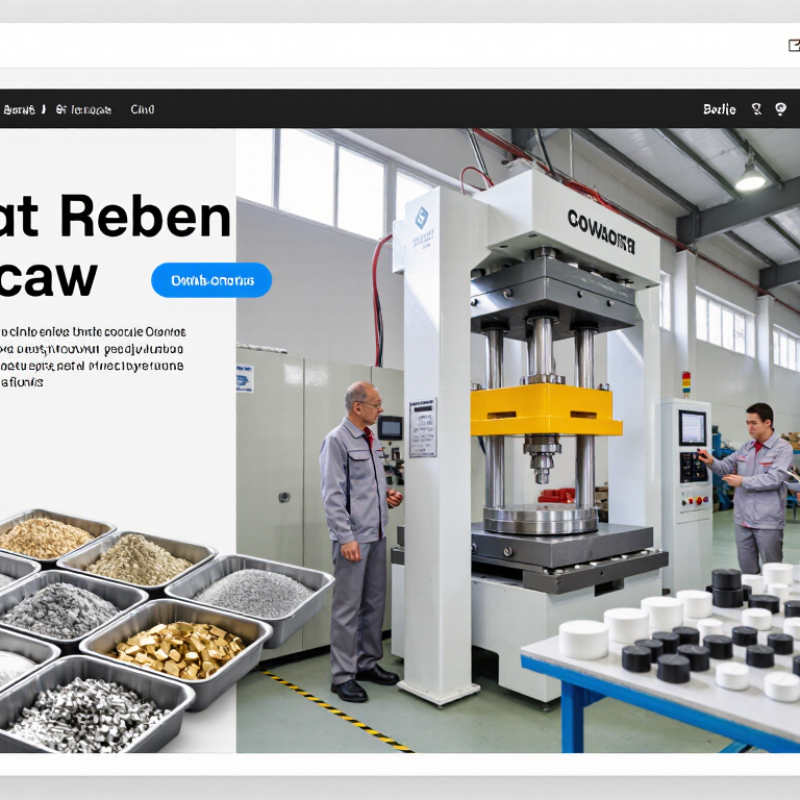
A powder pressing machine is industrial equipment that converts loose powder into a controlled, compact shape. It is used in powder metallurgy, ceramics, pharmaceuticals, and other regulated manufacturing fields. The machine fills a measured amount of powder into a die, then applies pressure through one or more punches. The result is called a green compact.
The working cycle appears simple. Powder enters the die cavity, while sensors help control filling height and weight. Upper and lower punches then compress the material. Pressure may range from tens to several hundreds of megapascals, depending on powder type, density, and product geometry. After pressing, the lower punch rises and ejects the compact without damaging its edges. Lubrication, particle size, moisture, and dwell time can change the final strength.
Small details matter.
Grand View Research estimated the global powder metallurgy market at about USD 2.5 billion in 2022, with continued growth expected through 2030. That trend reflects wider demand for efficient material use and near-net-shape production. However, market forecasts are not machine specifications. A higher tonnage rating does not automatically produce better parts. In practice, operators must check density variation, punch wear, powder flow, and ejection force. A clean laboratory result may also change on a busy production line. That limitation deserves attention.
Key operating principles, machine types, process stages, and typical technical parameters
| Data Dimension | Typical Value or Range | Description |
|---|---|---|
| Primary Function | Compact loose powder into a shaped green compact | A powder pressing machine applies controlled force through a die and punches to form a part before sintering, curing, or another finishing process. |
| Common Powder Materials | Metals, ceramics, graphite, carbides, and composite powders | The powder’s particle size, shape, flowability, moisture content, and lubrication strongly influence filling, compaction, and final density. |
| Main Machine Types | Mechanical, hydraulic, and rotary presses | Mechanical presses are suited to high-speed production, hydraulic presses provide flexible force and dwell control, and rotary presses support continuous multi-station production. |
| Powder Feeding | Gravity feed, shoe feed, or metered feeder | The feed system fills the die cavity with a controlled volume of powder. Consistent filling is essential for uniform part weight and density. |
| Die and Punch Assembly | Die cavity with one or more upper and lower punches | The die defines the outside shape, while the punches apply force and control the compact’s height, geometry, and ejection movement. |
| Typical Compaction Pressure | Approximately 50–1,000 MPa | The required pressure depends on the material, powder characteristics, part geometry, target density, and acceptable defect level. Actual settings must be established by process trials. |
| Press Force Capacity | From several tonnes to several hundred tonnes | Required force is determined by projected part area and compaction pressure. Larger parts and higher-density applications generally require greater press capacity. |
| Filling Stage | Die cavity is filled to a controlled height | The lower punch is positioned to create the required cavity volume, and the powder feed shoe or feeder transfers powder into the die. |
| Compaction Stage | Upper and lower punches move toward each other | Applied pressure rearranges particles, reduces voids, and creates interparticle bonding sufficient for handling the newly formed compact. |
| Dwell Time | Typically milliseconds to several seconds | A short hold at peak pressure can improve density uniformity and allow elastic deformation to stabilize. The correct time depends on the powder and part design. |
| Ejection Stage | Lower punch rises while the die or feed shoe withdraws | The formed compact is carefully pushed out of the die. Controlled ejection helps reduce cracking, chipping, and dimensional damage. |
| Green Compact | Pressed part before final thermal treatment | The green compact has sufficient strength for handling but normally has lower strength and density than the finished component. |
| Density Control | Controlled through pressure, fill height, punch movement, and powder preparation | Uniform density is important because density variations can cause shrinkage differences, cracking, distortion, and inconsistent mechanical properties during later processing. |
| Typical Production Rate | From a few parts per minute to several hundred parts per minute | Production speed varies with press type, part size, number of cavities, powder flowability, inspection requirements, and the time required for filling and ejection. |
| Key Process Variables | Pressure, fill depth, punch speed, dwell time, lubrication, and ejection force | These variables are adjusted to achieve the required dimensions, density distribution, surface quality, production rate, and green strength. |
| Typical Applications | Gears, bushings, filters, cutting inserts, magnets, wear parts, and ceramic components | Powder pressing is useful for producing repeatable shapes with efficient material utilization and limited machining after pressing. |
| Post-Press Operations | Sintering, debinding, curing, sizing, impregnation, or machining | The selected secondary operation depends on the powder system and required final properties. Thermal treatment commonly increases strength and reduces residual porosity. |
A powder pressing machine compacts measured powder inside a rigid die. Its key components must control force, movement, and density together. The feed shoe carries powder from the hopper and fills the die cavity. A scraper or dosing gate helps maintain a consistent fill height. Small variations matter.
The die defines the part’s shape, while the upper and lower punches apply pressure from opposite directions. In hydraulic designs, cylinders generate controlled pressing force; mechanical systems use cams, eccentric drives, or servo actuators. The lower punch also supports powder during filling and raises the compact during ejection. A frame absorbs the load, and guide columns reduce punch misalignment. Sensors monitor force, position, and cycle timing. The controller then adjusts filling or pressing settings. It is not magic.
Grand View Research estimated the global powder metallurgy market at about USD 2.4 billion in 2023, with strong growth expected through 2030. This expansion increases demand for repeatable compaction equipment. A 2024 MarketsandMarkets assessment also identifies automotive, aerospace, and industrial applications as major growth areas. However, market growth does not guarantee stable parts. Powder flow, moisture, particle size, and tooling wear can change density. In real production, a force curve may look acceptable while hidden cracks remain. Operators should inspect ejection behavior, measure dimensions, and review density results regularly. The machine is precise, but the process still needs judgment.
A powder pressing machine turns loose powder into a firm, shaped component through measured pressure. The cycle starts with powder preparation. Technicians check moisture, particle size, and flow behavior. These factors affect filling accuracy and final strength.
The powder enters a die cavity through a feeder or dosing system. The lower punch sets the filling depth. A measured amount then settles inside the cavity. The upper punch moves downward and compresses the powder. Pressure removes air and bonds particles through mechanical contact. Some materials need a short dwell time under pressure. The lower punch rises next. It pushes the compacted part gently from the die. An operator then removes the piece for inspection. Weight, dimensions, cracks, and surface marks reveal process problems.
Small changes matter. Uneven filling can create weak edges or density differences. Excessive pressure may damage the tooling or produce hidden cracks. The correct setting depends on powder characteristics and part geometry. Experienced technicians adjust pressure gradually, rather than relying on one fixed value.
Tips: Keep the die and punches clean. Measure powder moisture consistently. Record pressure, fill depth, and ejection behavior for every trial. Watch the first pieces closely. They often expose setup errors. A useful improvement is to compare rejected parts with process records. The cause is not always obvious, and a second review may prevent repeated defects.
A powder pressing machine compacts loose powder inside a shaped die. Upper and lower punches apply controlled pressure. The result is a “green” part, ready for sintering or further processing. Product quality depends less on pressure alone than on powder behavior, tooling, and process control.
Particle size distribution affects filling, density, and surface finish. Moisture can cause sticking or weak edges. ASTM B212 uses a 25 cm³ cup to measure apparent density, while ASTM B213 evaluates the flow time of a 50-gram powder sample. These simple measurements reveal whether powder fills the die consistently.
ISO 4490 also supports standardized Hall flow testing. In practice, uneven filling may create density differences between the top and bottom of one part. I have seen operators increase pressure to fix this. It sometimes makes the defect worse. Excessive force can increase cracking, tool wear, and ejection damage.
Tips: Keep powder temperature and humidity stable. Check die alignment before production. Record fill height, pressing force, ejection force, and green density. Compare results with ASTM and ISO test methods, not visual judgment alone. A 2024 World Powder Metallurgy Association industry review also emphasizes repeatable density and dimensional control as major quality indicators. Small variations matter. Calibration should be frequent, because sensors drift and operators change. That human factor is easy to underestimate.
Powder pressing machines compact metal, ceramic, graphite, or pharmaceutical powders inside a shaped die. A punch applies controlled pressure, creating a “green” part before sintering or further treatment. The process resembles filling a small metal mold, but density control is much less forgiving.
Mechanical presses suit high-volume parts, such as gears, bushings, and structural components. Hydraulic presses provide slower, adjustable force for larger ceramic tiles, refractory shapes, and laboratory samples. Isostatic presses use fluid pressure around a flexible mold, helping produce complex parts with more uniform density. Rotary tablet presses are common in pharmaceutical production, where accurate dosing and smooth ejection matter.
Market evidence supports this broad use. Grand View Research’s 2024 Powder Metallurgy Market Analysis estimated the global market at about USD 2.9 billion in 2023 and projected continued growth through 2030. The report links demand to automotive, aerospace, electronics, and medical manufacturing. Yet market growth does not remove process risks. Uneven powder flow can leave a hidden density gradient, and that defect may appear only after sintering.
Tips: Check powder moisture, particle size, and die-wall lubrication before pressing. Record fill height and ejection force. Small changes matter. Operators should also inspect tooling wear regularly, because a worn punch can quietly change dimensions. A perfect-looking green compact can still fail; this is where production teams must question their measurements, not only the machine.
