What is a Hydraulic Pump and How Does it Work?
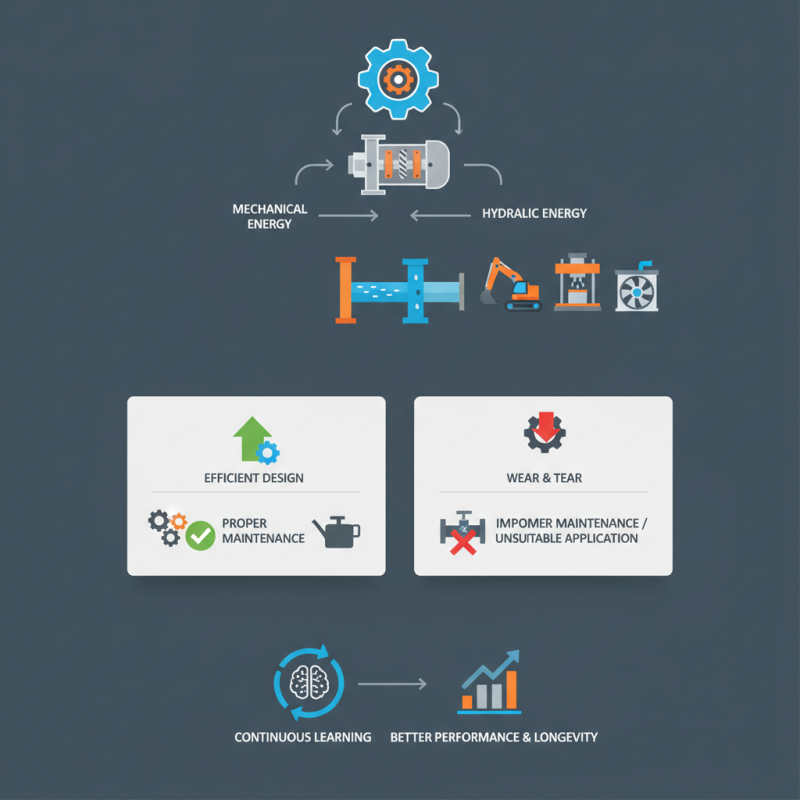
Hydraulic Pumps play a critical role in various industrial applications. These machines convert mechanical energy into hydraulic energy, driving numerous essential processes. Understanding hydraulic pumps is crucial for engineers and technicians alike.
Hydraulic pumps operate on a simple principle. They create a pressure differential that moves fluid through a system. This movement enables the transfer of power, which is vital for heavy machinery and hydraulic systems. The design and efficiency of hydraulic pumps have a direct impact on overall system performance.
However, not all hydraulic pumps function perfectly. Issues such as wear and tear, improper maintenance, or unsuitable applications can lead to failures. Knowing how these problems arise helps improve reliability. Continuous learning and adaptation in hydraulic systems contribute to better performance and longevity.
What is a Hydraulic Pump? Definition and Overview of Operation Principles
Hydraulic pumps are essential devices that convert mechanical energy into hydraulic energy, enabling various industrial applications. In simpler terms, they move fluid and create pressure, allowing machines to perform work. Understanding their operation principles can enhance efficiency and safety in numerous environments. According to the International Organization for Standardization (ISO), hydraulic systems account for roughly 15% of the total energy used in industrial applications.
A hydraulic pump's design typically revolves around key principles like displacement and pressure. Displacement refers to the volume of fluid moved per cycle. Different types of pumps, such as gear, vane, and piston pumps, offer distinct advantages. For instance, piston pumps are known for their high-pressure capabilities. Studies by the Fluid Power Institute reveal that optimizing these systems can increase operational efficiency by up to 30%.
However, challenges exist in maintaining these systems. Contamination of hydraulic fluids can lead to significant performance issues. Furthermore, improper sizing of pumps can create inefficiencies or equipment failure. Recognizing these pitfalls is crucial. The Hydraulic Institute reports that between 10% and 25% of a hydraulic system's energy can be lost due to inefficiencies. It's vital for engineers to continually assess and improve hydraulic pump systems to achieve optimal performance.
Hydraulic Pump Efficiency by Type
The chart above illustrates the efficiency of different types of hydraulic pumps. Gear pumps typically operate at an efficiency of 85%, vane pumps at around 90%, and piston pumps leading with an efficiency of 95%. This indicates that piston pumps are the most efficient choice in hydraulic applications.
Types of Hydraulic Pumps: Comparing Gear, Vane, and Piston Pumps
Hydraulic pumps play a crucial role in converting mechanical energy into hydraulic energy. The effectiveness of these pumps depends on their design. Three common types of hydraulic pumps are gear pumps, vane pumps, and piston pumps. Each type operates differently and suits various applications.
Gear pumps use rotating gears to increase fluid pressure. They are simple, reliable, and commonly used in industrial machinery. Their design allows for a continuous flow of fluid. However, they can be less efficient at higher pressures and may lead to leakage issues over time.
Vane pumps utilize sliding vanes within a rotor. This setup allows for variable flow rates. They provide smoother operation and are less prone to cavitation. However, they can wear out faster due to the constant friction and require regular maintenance.
Piston pumps operate by using reciprocating pistons. They offer high efficiency and are capable of generating high pressures. Their complexity can lead to higher costs and need for precise adjustments. Understanding the strengths and weaknesses of each type can guide users in selecting the right pump for their hydraulic systems.
Key Components of Hydraulic Pumps: Anatomy and Functionality Explained
Hydraulic pumps are vital in various industries, converting mechanical energy into hydraulic energy. Understanding their key components is essential for effective maintenance and operation. The main parts include the pump casing, motor, reservoir, and hydraulic fluid. Each element plays a crucial role in the pump’s efficiency and performance.
The pump casing houses the internal components. It protects them and ensures hydraulic fluid flows correctly. The motor powers the pump, driving the hydraulic fluid through the system. According to industry data, poorly maintained motors can lead to a 20% drop in efficiency. The reservoir stores the hydraulic fluid, which should be clean and at the right temperature for optimal operation. Temperature variations can significantly affect fluid viscosity, leading to performance issues.
Hydraulic fluid is often overlooked, yet it is fundamental for system functionality. It carries energy and must be compatible with all components. Regular fluid analysis can prevent expensive repairs. A study found that nearly 30% of hydraulic system failures are linked to fluid contamination. Monitoring each component’s condition is essential for ensuring smooth operation. Understanding these intricacies allows operators to mitigate risks effectively.
Efficiency Metrics in Hydraulic Pumps: Understanding Flow Rate and Pressure
Hydraulic pumps play a crucial role in various industries, converting mechanical energy into fluid power. Understanding efficiency metrics in these pumps is essential. Two key factors are flow rate and pressure, which determine a pump's operational effectiveness.
Flow rate measures the volume of fluid a pump moves per unit time. It directly impacts the system's performance. Higher flow rates can imply faster operation, yet they sometimes lead to increased energy consumption. Balancing the flow rate with system requirements is vital for efficiency.
Pressure gauges the force with which fluid is delivered. Higher pressure often means a stronger force to operate machines or tools. However, excessive pressure can stress system components, leading to failures. A careful assessment of pressure levels is necessary to ensure optimal functioning. Regular analysis can reveal inefficiencies and areas for improvement in hydraulic systems.
Applications of Hydraulic Pumps: Industries Relying on Hydraulic Systems
Hydraulic pumps are vital components in many industries. They convert mechanical energy into hydraulic energy. This transformation allows machines to perform tasks that require significant force. Construction, agriculture, and manufacturing heavily rely on hydraulic systems. In construction, hydraulic pumps power heavy-duty equipment like excavators and cranes. These machines need reliable power to lift heavy loads.
In agriculture, hydraulic systems operate tractors and harvesters. This technology enhances efficiency and reduces manual labor. Agricultural machinery can precisely control the amount of force applied. This leads to better crop management and resource allocation.
Tips: Ensure regular maintenance of hydraulic pumps. Neglect can cause performance issues. Check for leaks and wear regularly. Understanding your machinery is key. Always refer to the manufacturer’s guidelines for proper usage.
Manufacturing processes also benefit from hydraulic pumps. They drive presses, molding machines, and more. Efficient hydraulic systems improve production rates. However, improper setup can lead to inefficiencies. Identifying the right specifications is crucial. Each industry has its own requirements, and it's essential to tailor systems accordingly.