Best Brass Die Casting Techniques for Quality Production?
Brass Die Casting is a vital process in manufacturing, known for its quality and precision. According to a recent report by the Global Die Casting Market, the industry is expected to reach a value of $12.6 billion by 2026. This growth reflects the increasing demand for durable and lightweight components in various sectors, including automotive and electronics.
Despite its advantages, achieving high-quality output in brass die casting is not without challenges. Factors such as mold design, metal temperature, and cooling times can significantly impact the final product's quality. Industry experts note that approximately 30% of die-cast products face quality issues, pointing to the need for ongoing improvement and mastery in techniques.
Best practices in brass die casting involve careful material selection and rigorous testing. Advanced technologies, such as simulation software, help identify potential defects early in the process. Yet, companies often struggle with cost management while optimizing for quality. This balancing act requires a deep understanding of both the technical and economic aspects of the brass die casting process.
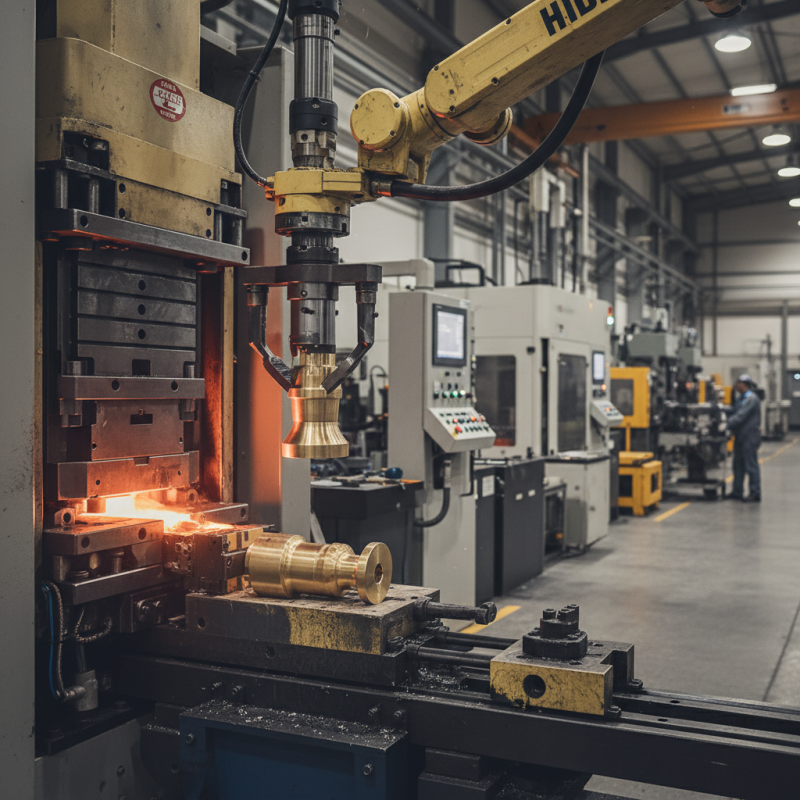
Overview of Brass Die Casting Techniques
Brass die casting techniques are essential for producing high-quality components. This process involves forcing molten brass into a mold. The precision of this method allows for intricate shapes and detailed designs. Key techniques include hot chamber and cold chamber die casting. Each has distinct benefits and drawbacks.
Hot chamber die casting is efficient for creating complex parts. However, it is limited to metals with low melting points. Cold chamber die casting is more versatile for high-temperature alloys. Yet, it typically requires more setup time. Choosing the right technique depends on material properties and production volume.
Quality control is crucial in brass die casting. Factors like temperature, pressure, and mold design impact product quality. Manufacturers should pay close attention to these elements. Many face challenges, such as defects and inconsistencies. This often leads to rework and increased costs. Understanding these issues can help improve production processes.
Key Factors Influencing Brass Die Casting Quality
Brass die casting's quality largely depends on several key factors. Temperature control during the melting and injection phases is critical. If the molten brass is too hot, it can lead to oxidation. Conversely, if it's too cold, it might not flow properly. Monitoring these temperatures is vital for maintaining consistent quality.
Another crucial element is the die design. A well-designed die minimizes defects such as porosity or voids. Complex designs can be challenging, but they also improve precision. Neglected designs may lead to costly defects. Ensure that the die is regularly inspected and maintained.
Tips: Maintain a clean workspace. Contaminants can ruin the finish. Regularly calibrate your equipment. This helps in achieving uniform results. Lastly, don’t rush the cooling process. Slow cooling can reduce stresses in the castings, leading to better durability. Overlooking these details may negatively impact the overall production quality.
Step-by-Step Process of Brass Die Casting
The brass die casting process involves several crucial steps to ensure quality production. First, the brass is heated to around 900°C, allowing it to become molten. Precision in temperature control is essential. According to industry data, mismanaging this can cause defects, leading to significant costs.
Next, the molten brass is injected into a die under high pressure. This step requires careful calibration of the injection speed. Studies show that over 70% of casting defects arise from improper injection techniques. After injection, the cooling process begins. Cooling times can vary; however, even minor variations can impact the final product's strength and finish.
When the parts are ejected from the die, it is crucial to inspect for quality. Even automated systems can miss defects. Data reports indicate that up to 5% of castings may still require rework. Continuous monitoring and adjustments in the process can help mitigate these issues. The complexity of the brass die casting process demands experience and attention to detail, highlighting areas needing constant reflection and improvement.
Common Issues in Brass Die Casting and Solutions
Brass die casting is a complex process that can present several common issues. One frequent problem is the formation of porosity in castings. This occurs when air gets trapped during the metal pouring. Porosity results in weak points, making the final product less durable. To mitigate this, manufacturers can enhance venting techniques. Better ventilation helps air escape during the mold-filling stage.
Another common issue is dimensional inaccuracy. Parts may come out larger or smaller than intended. This often stems from temperature variations or improper cooling rates. To combat this, it's essential to maintain strict control over the melting and cooling processes. Regular monitoring and adjustments help maintain consistency.
Surface defects like rough finishes can also be problematic. These imperfections can affect aesthetics and functionality. One solution is to carefully check the mold surface for wear or damage. Ensuring a smooth mold can help produce parts with a finer finish. Quality control checks throughout the production process can further minimize these issues. Regular evaluation leads to continuous improvement in brass die casting.
Advancements in Brass Die Casting Technology
Brass die casting has seen notable advancements in recent years. These improvements have enhanced production efficiency and part quality. New technologies focus on precision and sustainability. Manufacturers now utilize advanced simulations to optimize the die design. This reduces waste and promotes efficient use of materials.
Automation is another trend reshaping the industry. Automated systems increase production speed and consistency. However, the initial investment can be challenging for small companies. Workers still need training to operate new machinery effectively. Balancing human expertise with automation remains a key concern.
Additionally, innovations in alloy formulations lead to better corrosion resistance. This is crucial for industries requiring durable components. Yet, finding the right balance between performance and cost continues to be a dilemma. The evolution of brass die casting technology reflects a commitment to quality production. Still, manufacturers must constantly adapt to remain competitive.