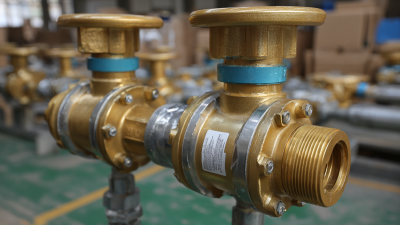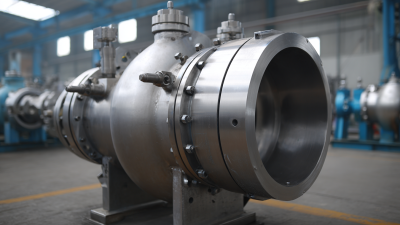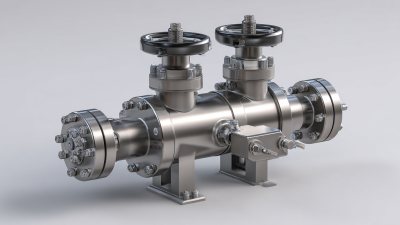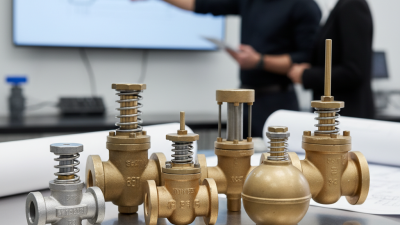
Choosing the right Air Compressor Check Valve in 2026 requires more than comparing prices or connection sizes. Modern compressors demand dependable flow control, low pressure loss, and fast protection against reverse airflow. A small valve failure can create a sharp metallic knock, overheated components, or repeated pressure cycling. These details matter in real maintenance rooms.
This introduction examines the leading check valve types used with air compressors. Spring-loaded valves remain popular for compact systems and predictable closing performance. Piston check valves suit demanding applications where pressure changes are frequent. Ball check valves offer simple construction and easy inspection. Swing check valves can support larger pipelines, although their installation position requires careful attention. Silent or non-slam designs are gaining interest because they reduce water hammer-like shock and operating noise.
Performance depends on more than valve type. Engineers should review airflow direction, working pressure, temperature, port size, sealing material, and compressor duty cycle. A valve that performs well on a small workshop compressor may struggle beside a high-capacity industrial receiver. It may also close too slowly. That weakness is easy to miss.
Reliable selection combines manufacturer data, installation experience, and scheduled inspection. Look for stable closing, clean sealing surfaces, and compatibility with oil-lubricated or oil-free air systems. Standards and technical documentation should guide the final decision, not marketing language alone. No single valve wins every installation. That is worth remembering. This guide compares the 2026 top Air Compressor Check Valve types, their practical strengths, limitations, and suitable operating environments.
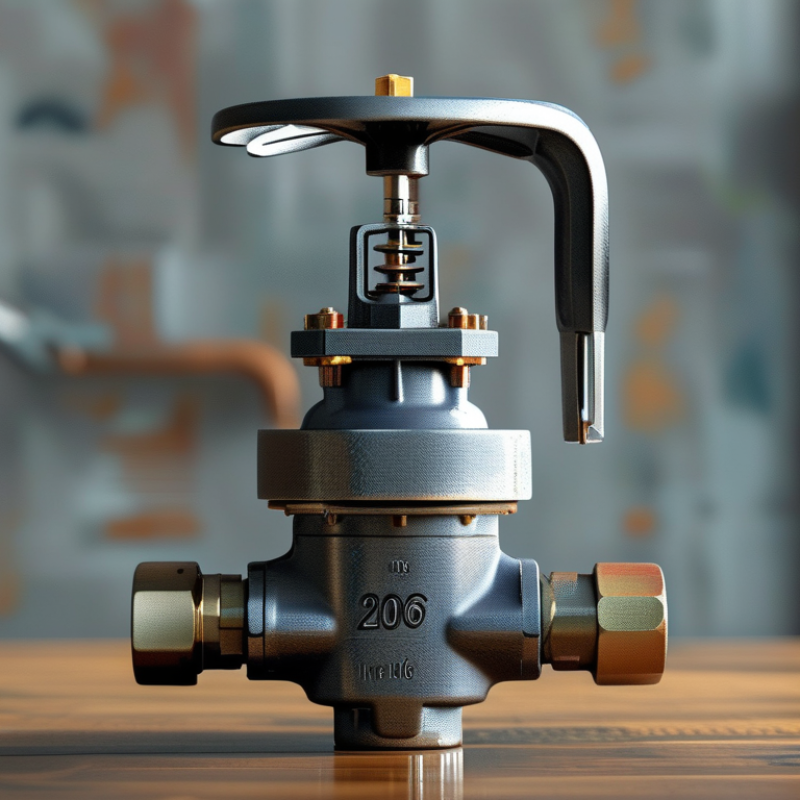
For 2026 systems, spring-loaded inline, piston-lift, ball, and wafer check valves remain practical choices. Spring-loaded valves suit compact compressor discharge lines. Piston valves tolerate frequent cycling and moderate pressure pulses. Ball valves handle dirty air better, but their response can be slower. Wafer designs save space between flanges.
Small detail. Installation direction still matters.
Flow must follow the arrow on the body. Reverse flow can damage seals and unload the compressor incorrectly. Engineers should calculate Cv from actual airflow, pressure, temperature, and gas density. The common liquid formula can mislead with compressed air. Δp is the pressure loss across the valve. A low Δp usually improves efficiency, yet an oversized valve may close too slowly.
The U.S. Department of Energy reports that compressed-air leaks commonly waste 20–30% of compressor output. A leaking or poorly closing check valve can add to that loss.
PN ratings need careful reading. EN 1333 defines PN as a reference pressure designation, not a universal working pressure at every temperature. A PN16 valve is not automatically safe at 16 bar under all conditions. ISO 1217 provides compressor performance measurement principles, but it does not replace valve sizing calculations.
In practice, compare the valve’s rated pressure, temperature limit, Cv, cracking pressure, and test evidence.
Field readings are valuable.
My own caution is simple: catalog numbers rarely predict every pulsation pattern. Check valve selection still deserves a measured review after commissioning.
Spring-loaded poppet valves remain a strong choice for high-cycle air compressors in 2026. Their main advantage is rapid closure when airflow reverses. A spring pushes the poppet against its seat, limiting backflow before pressure can travel through the discharge line. This action protects compressor efficiency and reduces pressure pulsation.
In practical service, closure speed depends on spring force, poppet mass, seat design, and pressure differential. A lighter poppet usually responds faster. However, an overly strong spring can increase cracking pressure and restrict airflow. Technicians should verify the valve’s rated pressure, temperature range, and compatible sealing materials before installation. Small details matter. A dusty workshop can quickly damage a precision seat.
Field inspections often reveal uneven seat wear, weakened springs, or deposits around the guide. These faults may cause delayed closure, noise, and higher operating temperatures. Listening near the valve can help, but sound alone is not reliable evidence. Pressure readings and flow tests provide stronger confirmation. I have found that installation orientation is sometimes overlooked, especially in compact compressor packages. That mistake can affect movement and drainage. No poppet valve is perfect. Engineers still need to balance fast response, service life, pressure loss, and maintenance access. A design that performs well on a test bench may behave differently after thousands of cycles.
What Are the 2026 Top Air Compressor Check Valve Types?
Swing, ball, lift, and wafer check valves differ sharply in Cv and pressure drop. Swing valves usually provide the highest Cv because their disc opens widely with modest flow resistance. Ball valves can perform well, but their guided ball may reduce the passage area. Lift valves offer dependable sealing, yet their narrow flow path often creates greater pressure loss. Wafer valves save installation space and may balance compactness with moderate Cv.
For a practical comparison, illustrative 2-inch water-service data might show swing Cv near 150–220, ball Cv around 100–180, wafer Cv around 90–160, and lift Cv near 40–100. These figures are not universal. At 100 gallons per minute, a Cv of 50 can create about 4 psi of liquid pressure drop, while a Cv of 150 may create less than 0.5 psi. Compressed air requires more careful analysis because pressure, temperature, and gas density change the result. I have seen selections fail when liquid-based calculations were applied directly to air systems.
Tips: Check the valve’s certified Cv curve, not only its pipe size. Compare pressure drop at actual mass flow and inlet pressure. Inspect the hinge, spring, or ball after commissioning. A slightly higher Cv may reduce energy loss, but poor installation can erase that advantage. Clearance matters too. Valves need straight pipe and service access, although field layouts rarely feel perfect.
What Are the 2026 Top Air Compressor Check Valve Types?
Choosing a check valve starts with flow data, not catalog size. ISO 1217 provides compressor delivery data under defined reference conditions. Use free air delivery, discharge pressure, temperature, and operating duty for a realistic calculation. Convert the reported flow to actual line conditions before estimating velocity and pressure loss. A valve that looks large on paper may still restrict flow during peak demand.
Spring-loaded inline valves suit compact, clean air systems. Lift or piston valves handle stronger pressure pulses when correctly guided. Swing valves can work in larger lines, but they need careful installation and sufficient flow stability. Match the valve DN to the pipe and equipment connection. DN50 does not automatically mean identical bore dimensions. Check the actual inside diameter and flow area. Confirm the PN rating against maximum pressure and temperature. PN is not a universal pressure guarantee at every temperature.
Tips: Record ISO 1217 flow, minimum inlet pressure, and reverse-flow risk. Then compare cracking pressure, pressure drop, DN, PN, and connection standards, such as threaded or flanged designs. Verify BSP, NPT, EN, or ASME compatibility before ordering. A practical lesson is easy to miss: pulsation can damage a technically correct valve. I have seen sizing based only on average flow fail during compressor cycling. Recheck the worst case. Field data may expose an imperfect calculation.
Sizing the valve with ISO 1217 flow data, DN, PN, and connection standards
Use the compressor's measured free air delivery, normally expressed in m³/min, as the sizing input. ISO 1217 defines compressor performance test and acceptance methods; it does not assign a universal flow capacity to a check valve.
Select DN from the required flow, allowable velocity, and pressure drop. PN is the nominal pressure designation in bar at a reference temperature, so the actual pressure-temperature rating must be verified for the valve material.
Common interfaces include EN 1092-1 flanges, ASME B16.5 flanges, ISO 7-1 or ASME B1.20.1 threaded ends, and ASME B16.11 socket-weld or threaded fittings. Confirm face-to-face dimensions and bolt patterns before installation.
The chart shows representative commonly specified PN designations for industrial compressor installations, not a universal maximum rating or market-share ranking. Final selection should use the valve manufacturer's certified pressure-drop data, compressor FAD, gas temperature, pulsation level, and applicable piping standard.
What Are the 2026 Top Air Compressor Check Valve Types?
For 2026, spring-loaded, lift, wafer, and pilot-assisted check valves remain practical choices. The correct type depends on flow direction, pressure, temperature, and installation space. A valve that closes quickly can reduce reverse flow and compressor unloading losses. However, fast closure may create water hammer or extra noise. Field experience matters here. Catalog ratings alone are not enough.
Leakage validation should follow EN 12266-1, using the specified test medium, pressure, duration, and acceptance class. Record upstream pressure, downstream pressure, seat leakage, and test temperature. Small leakage can become expensive. The U.S. Department of Energy reports that compressed-air leaks may waste 20–30% of compressor output. Check valves should also protect the required air quality under ISO 8573-1. For example, ISO Class 1 oil allows no more than 0.01 mg/m³. Particle limits and pressure dew point must match the process. A valve cannot clean contaminated air. It only controls flow.
Tips: Test the valve after piping installation. Inspect the seat, spring, and sealing surface. Measure leakage again after thermal cycling. Do not assume a clean laboratory result survives vibration, oil carryover, or condensate. The ISO 8573-1 class should appear in the inspection record. EN 12266 results should include the exact leakage rate and test conditions. I would not call a valve fully validated without both records.
| Check Valve Type | Typical Connection / Size Range | Typical Pressure Capability | Main Operating Characteristics | EN 12266 Leakage Validation | ISO 8573-1 Air-Quality Considerations | Common Compressor Application |
|---|---|---|---|---|---|---|
| Spring-Loaded Inline | Threaded, socket-weld or flanged; approximately DN6–DN100 | Commonly up to 40 bar, depending on body and seal materials | Compact, short flow path and reliable installation in vertical or horizontal pipework; cracking pressure is normally spring-dependent. | Verify seat tightness in the intended flow direction using EN 12266-1. Rate A is a suitable design target when a resilient seat and the specified test conditions permit no visible leakage. | Use corrosion-resistant wetted parts and low-shedding seals. The valve should not introduce particles, water or oil; final air class requires upstream treatment and downstream filtration. | Discharge lines, receiver inlets, dryer outlets and compact compressed-air manifolds. |
| Lift Check Valve | Threaded or flanged; approximately DN15–DN150 | Often used from low pressure up to approximately 100 bar in suitable designs | Good reverse-flow protection and robust construction; requires correct orientation and generally has higher pressure loss than a full-bore design. | Test the closure member and seat according to EN 12266-1. Record test medium, pressure, duration, direction and observed leakage; do not infer gas tightness from a liquid-only test. | Select clean, non-shedding seat materials. For oil-free or instrument air, confirm that lubricants, sealants and assembly residues are compatible with the required ISO 8573-1 oil class. | High-pressure compressor discharge, receiver protection and process-air backflow prevention. |
| Piston Check Valve | Threaded or flanged; approximately DN15–DN100 | Commonly selected for approximately 16–250 bar, subject to design and temperature limits | Suitable for pulsating compressor flow and high differential pressure; may require a minimum flow velocity and careful control of pressure drop. | Use EN 12266-1 seat testing to confirm the specified leakage rate. For demanding applications, repeat the test after cycling because piston and seat wear can affect closure performance. | Avoid exposed lubricants or incompatible elastomers. If the target is ISO 8573-1 Class 1 oil, verify total oil carryover from the compressor system, not only the valve. | Reciprocating compressor discharge, high-pressure air systems and applications with pressure pulsation. |
| Swing Check Valve | Wafer, lugged or flanged; approximately DN50–DN600 | Typically up to 40 bar, depending on pressure class and body design | Low pressure loss at adequate flow; requires suitable orientation and may be vulnerable to disc slamming in rapidly cycling systems. | Perform closure testing under EN 12266-1 with the disc fully seated. A controlled closing mechanism may be needed where reverse-flow impact could compromise the seat. | Keep internal surfaces clean and specify suitable coating or stainless-steel trim where condensate or oil contamination could affect air quality. | Large compressor headers, cooling-air systems and low-pressure-loss discharge piping. |
| Dual-Plate Wafer Check Valve | Wafer or lug style; approximately DN50–DN600 | Commonly available up to 100 bar or higher in specialized pressure classes | Lightweight and space-saving with short face-to-face length; spring condition and correct flange alignment are important for stable closure. | Validate each plate and seat assembly under EN 12266-1. Check both the preferred flow direction and reverse-flow sealing condition where the installation requires it. | Use clean springs, compatible elastomers and a surface finish suitable for the required air service. ISO 8573-1 classification must be confirmed by air sampling downstream. | Large-diameter compressor discharge and parallel compressor systems with limited installation space. |
| Ball Check Valve | Threaded or flanged; approximately DN15–DN150 | Often used up to approximately 40 bar, with higher ratings available for selected designs | Simple construction and good tolerance of dirty or condensate-bearing flow; pressure loss can increase at high flow rates. | Confirm ball-to-seat sealing with EN 12266-1 testing. Check that the ball material and seat remain stable after the specified pressure and temperature cycles. | Suitable for general compressed air when materials are compatible. Drainage and filtration remain necessary because the valve does not remove condensed water or oil aerosol. | Condensate-prone lines, low-to-medium pressure air distribution and small compressor packages. |
| Diaphragm Check Valve | Threaded or flanged; approximately DN6–DN100 | Commonly used up to approximately 25 bar, depending on diaphragm material and temperature | Provides a clean flow path with few sliding parts; diaphragm fatigue, temperature and chemical compatibility must be evaluated. | Perform EN 12266-1 closure testing and include endurance cycling where the diaphragm is a critical barrier. Monitor for leakage caused by fatigue or permanent deformation. | A useful option for hygienic or oil-sensitive air systems when the diaphragm is low-shedding and compatible with the specified oil and particulate limits. Verify extractables where required. | Oil-free compressor packages, laboratory air and applications requiring a clean internal flow path. |